
Hiking matters #863: Mt. Dos Cuernos in Isabela, Days 1-2: To Shamag and Mt. Gida

On April 16-19, 2026, I had the distinct honor of climbing Mt. Dos Cuernos, the highest mountain in Isabela at over 1780 MASL and a storied, elusive destination for Philippine mountaineers, with the last hikes dating back to the early years of the past decade. In the process of climbing this legendary two-horned mountain, we stumbled upon Mt. Gida – the northern peak of a 1500-meter ridge, which we realize to be a beautiful destination in itself! Backed by the LGU of San Pablo, Isabela and the Department of Tourism, and with the guidance of Sir Guy Tiongson of Sierra Madre Outdoor Club (SMOC), I was accompanied by my longtime hiking buddy Daryl Comagon (AMCI) and three guides (Leslie, Alex, Tatay Rudy) who did a reconnaissance a week prior and assured us that they had reached the summit of Mt. Dos Cuernos and that it can be reached in 3-4 days. Some police officers also escorted us to the base camp. We had the best possible weather conditions for the Northern Sierra Madre but as my two-part account will recount, we still had to overcome numerous obstacles in order to reach our goal!
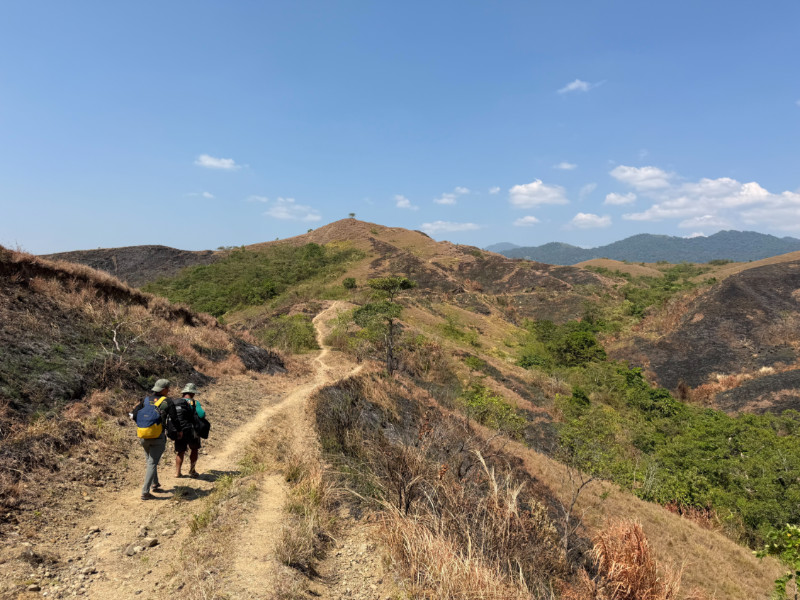
It was already 1310H when we started trekking on our first day – after paying a courtesy call to Mayor Miro and the LGU officials and making final arrangements. This first day – perhaps the most relaxing – involved trekking from where the road ends in Brgy. Simanu Norte to a mini-village called Shamag, named after an Ifugao patriarch who settled in the area from Mayoyao. Getting to this place involved a Talamitam-like trek across dry slopes – beware the heat index! – reaching modest elevations (300-400 MASL) before descending to a river and then gently ascending again to Shamag.
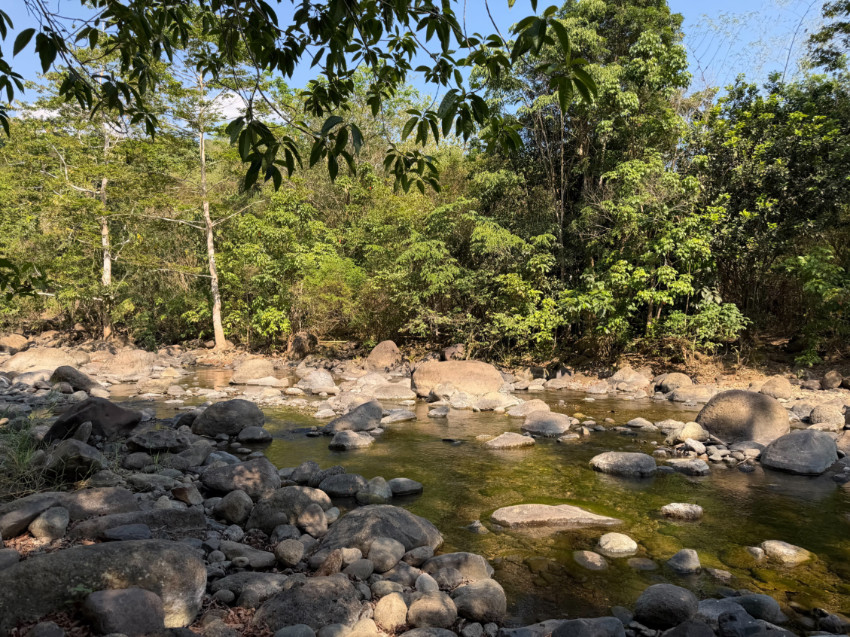
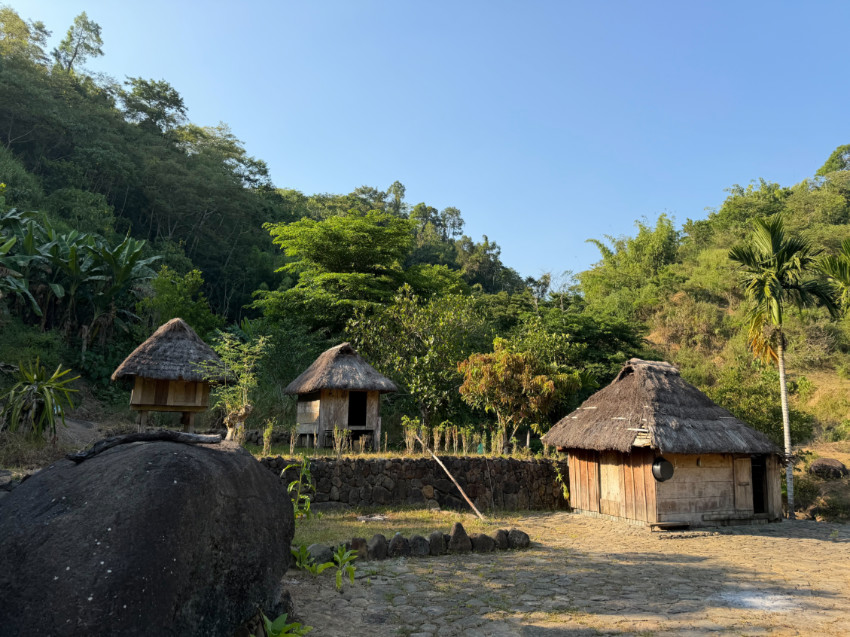
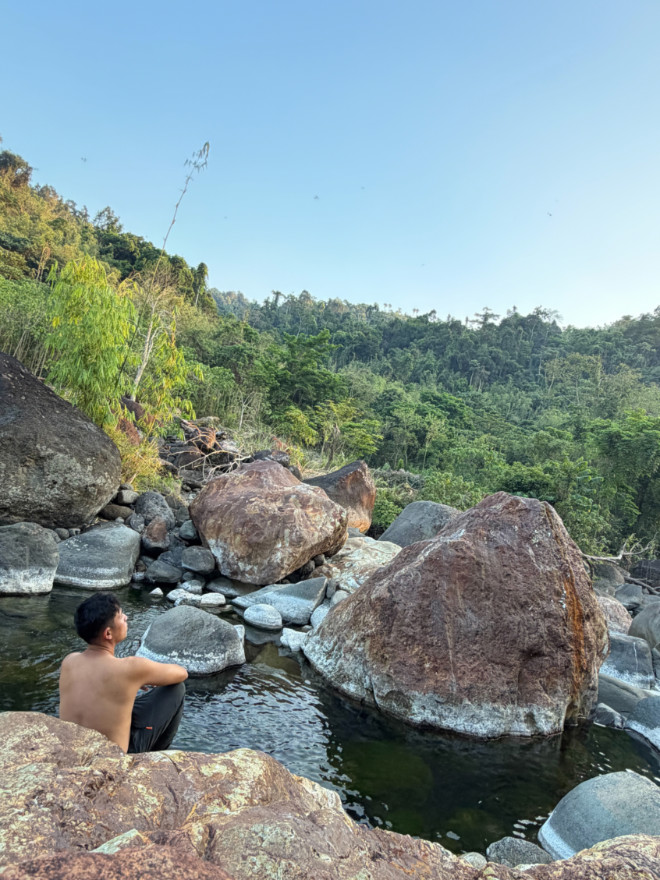
It was a beautiful place, perched atop a riverbend, wit h several wooden houses built in the style of Pat-yay or Cambulo; Shamag himself – now in his 70s or 80s – regaled us with Ifugao songs and we bathed in the river, slept in one of the huts.
The following day, we thought we were already on course for a very long day to reach the summit; the guides had conducted a reconnaissance a week before and based on their information and our own navigational calculations, an alpine-style ascent was feasible with a very long ‘dayhike’ from Shamag. It soon became clear, however, that just as we had suspected, what the guides reached was not Mt. Dos Cuernos but a place called Mt. Gida, and that a three-day itinerary was impossible.
This realization came as we negotiated the trek from Shamag (starting at 0500H) to where the guides camped: a trek that involved ascending open slopes called ‘Santiago’ (after the migrants who settled there from Santiago, Isabela), entering the forest, and sharply descending through overgrowth to reach the hunters’ trail from Peñablanca, Cagayan, to the deep mountains. We saw many silô (hunters’ traps) and a poor civet that got caught in one of them; we faced numerous rattan thorns, and managed to gain 1000 meters of elevation before reaching where the guides camped – a hunters’ tent with makeshift ‘stretcher beds’ made from rice sacks.
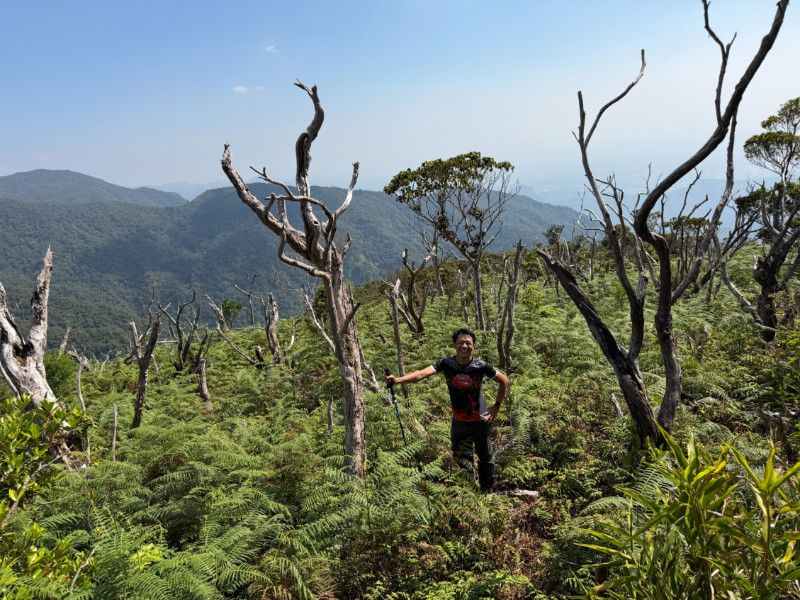
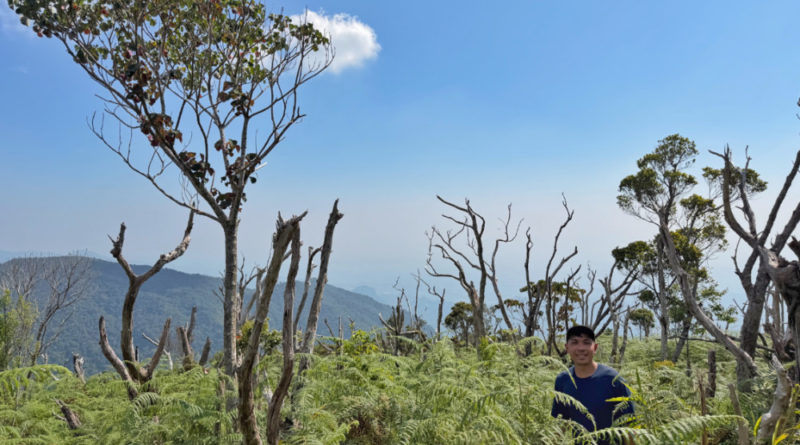
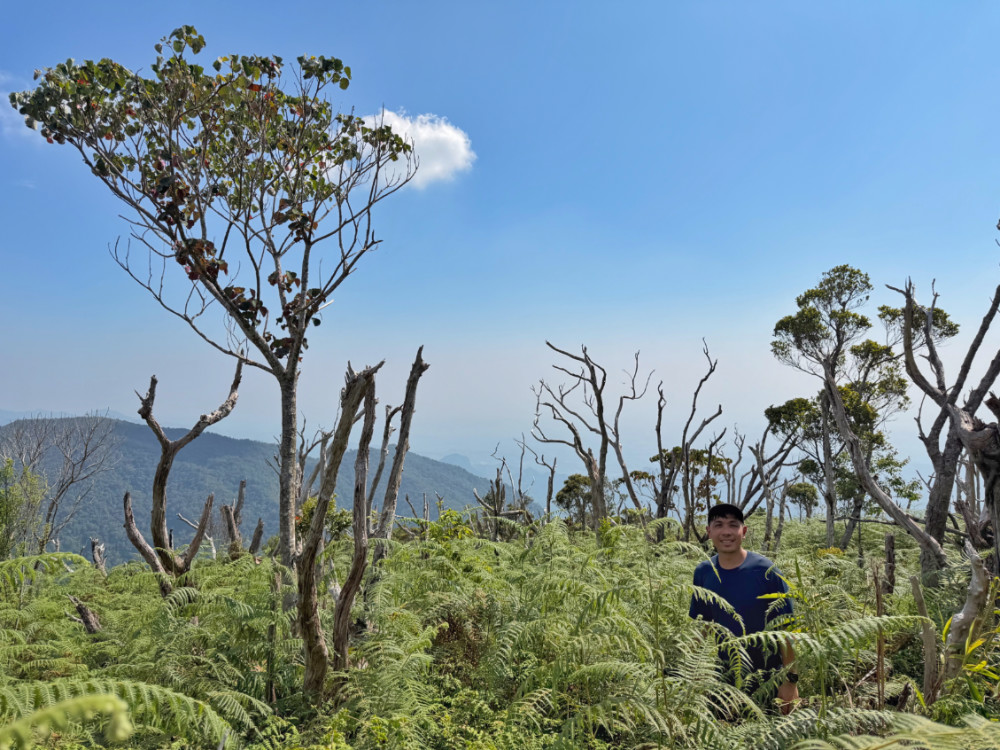
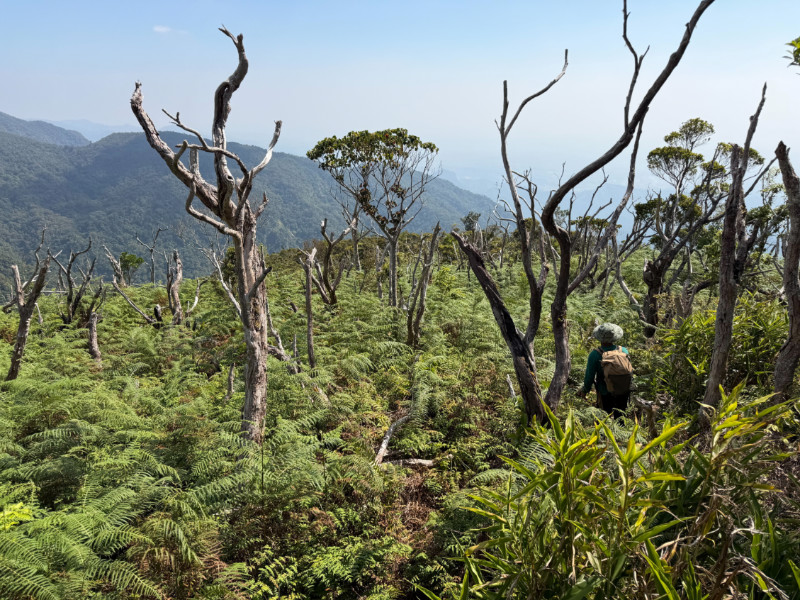
At that point – at around 1000H – the guides told us that we could reach the ‘summit’ in just an hour, but we knew – with further confirmation from Daryl’s drone – that we were nowhere close, so we made the decision to just stay put in Leslie’s campsite (a hunter’s camp that we are naming after one of the guides), an hour away from Mt. Gida, and do the attempt up Mt. Dos Cuernos the following day – notwithstanding our limited supplies. In the afternoon, we decided to go up Mt. Gida anyway, also to have an idea of just how far Mt. Dos Cuernos is, and what the trail conditions are past Gida. In an hour, we reached the summit: not the one we were dreaming of, but one that is beautiful and worthy of a hike in and of itself! There were dead trees reminiscent of Mt. Kalatungan, a panorama of the towns of Northern Isabela and Southern Cagayan; there was also a partial view of the horns of Mt. Dos Cuernos.
As we headed back to Leslie’s campsite, we were filled with trepidation and excitement over what lay beyond. To be continued in Hiking matters #864.


Leave a Reply
Be the First to Comment!