Wednesday, June 19, 2013

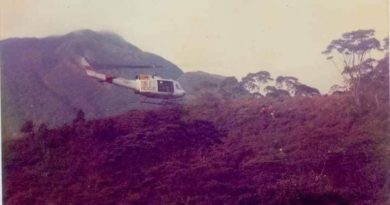
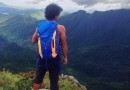
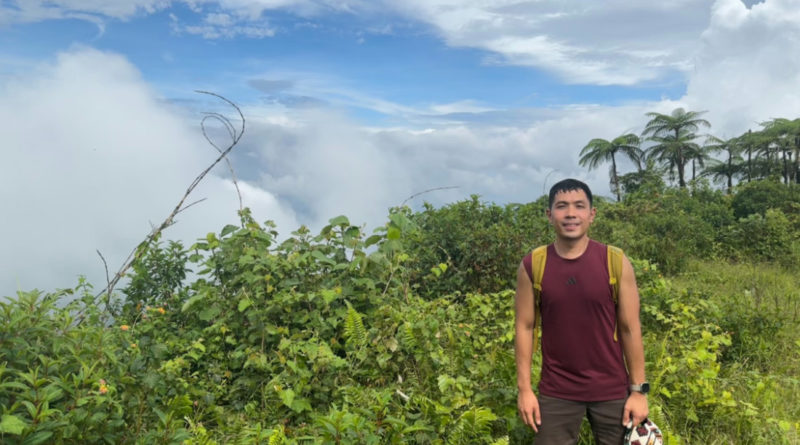
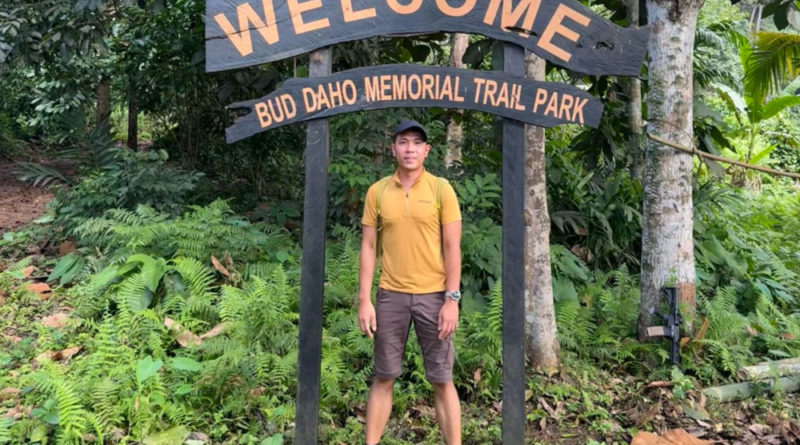
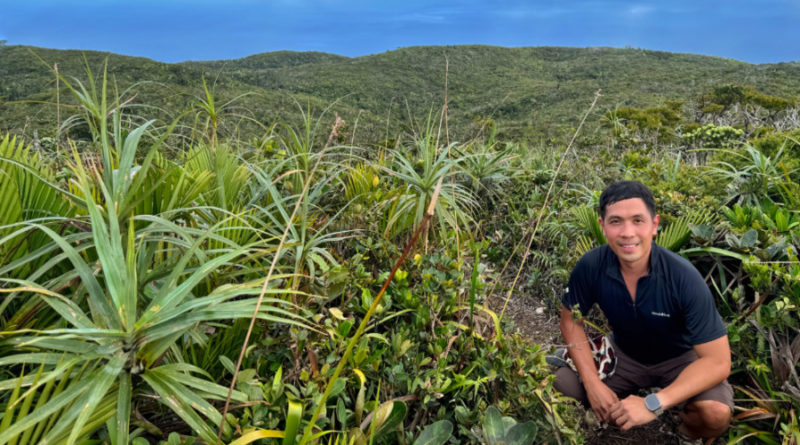
Mountaineer Joey Vergara missing, rescued in Malipunyo Range, Batangas

UPDATE 2: I am very happy to hear and share the good news that mountaineeer Joey Vergara has been found and rescued in Mt. Malipunyo. He got injured by a hunter trap. Kudos to the rescuers for respondng!

UPDATE 1: According to mountaineer Sha Bedural, Joey Vergara was spotted yesterday by a local guide: "Sa mga magulang, kapamilya at kaibigan po ni Joey Vergara, natawagan ko po si Kuya Mario at mga kakilala ko sa barangay na may sakop sa Malipunyo at Manabu, wag na po kayo magworry. According to Kuya Mario, nakita nya si Joey kahapon around 12noon daw nagtraverse paManabu at lowbat na daw yung cellphone. Baka daw pabalik na sya ngayon." 

BARCELONA - We have received reports that mountaineer Joey Vergara has been missing in the Malipunyo Range since Sunday, June 16, 2013. His father, Mr. Jess Vergara, has pleaded for help and information regarding his whereabouts on Joey's Facebook page.

Initial accounts state that Joey Vergara hiked Mt. Malipunyo over the weekend with a group of hikers, but he has also indicated in his Facebook wall that he intended to traverse to Manabu Peak in Sto. Tomas, Batangas. He told the rest of his group to go ahead, while he set off to do an overnight Malipunyo-Manabu Traverse:


We don't have details of this but we are hoping that he will be found soon. Do get in touch with his family through his Facebook page if you have pertinent information about his whereabouts.

The Malipunyo Range, with its many trails actively used by locals, is one of the most confusing mountains in the Philippines, with a number of incidents and/or rescues in the past several years, all of which ended with the missing hikers getting down safely.

Monday, June 10, 2013

Independence Day Message: What can we Filipino mountaineers do for our country?

The blogger at the Philippines exhibit in Musee du Quai Branly
in Paris, France, June 5, 2013
Essay written and published by PinoyMountaineer.com author Gideon Lasco on the occasion of 115th Independence Day of the Philippines, June 12, 2013.

BARCELONA, SPAIN - Here, in the first European city that Jose Rizal visited when he first came to Europe in 1882, my thoughts dwell on our beloved country on the occasion of our Independence Day. Yes, we are free in many ways, but the struggle remains to liberate ourselves and our fellow Filipinos from oppressions new and old. Indeed we must bear in mind that millions of our countrymen continue to suffer from hunger, violence, poor working conditions - both in our country and abroad. And then there are new threats to our national sovereignty, as well as persistent threats to our patrimony, that is, the environment.

Love for country, of course, is the premise for both celebration and concern about what is happening in our country. And it is here, in Barcelona, where Jose Rizal wrote the famous essay 'El Amor Patrio', which inspired Andres Bonifacio to pen these immortal lines:

Aling pag-ibig pa ang hihigit kaya /
sa pagkadalisay at magkadakila / 
Gaya ng pag-ibig sa sariling lupa? /
Aling pag-ibig pa? Wala na nga, wala.

(What other love that can surpass
In purity and in greatness,
The love of the native land?
What other love? No, none there is.)

As mountaineers, what can we do for our country? The same question, of course, can be asked of Filipinos in general, but I believe that we, with our common passion and shared experiences and insights, can make a distinct and significant contribution to our nation.

There is no contribution too small for nation-building. Instead of using the 'drop in the bucket' metaphor, let me invoke one closer to our minds: that of the power of a single step - 'one at a time' - to take us to the summit. Isn't it true that sometimes, when we look back at the peak we just reached, it's hard to believe that we actually walked that far? But humans actually have an innate ability to achieve great things if we set our hearts to it; this is one of the greatest lessons the mountains can teach us. Moreover, I also believe that the mountaineering community in the Philippines has grown to a point where our influence cannot be underestimated.

First, we must use the freedom of speech to articulate issues and struggles that we are privileged to see because we see more of the country that most Filipinos do. We have heard the sound of chainsaws and falling trees, and we have seen the aftermath of illegal logging and destructive practices like kaingin (slash-and-burn agriculture). We too have heard the woes of local communities who say their land was taken away from them; of indigenous peoples without access to health and education; of villages under threat of mining and exploitation. Simply by voicing these issues out in our social networks is in itself an act of defiance, which if done en masse is able to merit public attention and galvanize public support. Actions may speak louder than words, but the pen - and now the computer - is mightier than the sword. In fact, the computer has become both the pen and the sword.

Second, we must be ambassadors for national unity, solidarity, and pride. When we visit mountain communities, do we see ourselves as 'foreigners' to the people there? If so, then we must try to know them. This is not hard to do for mountaineers. Guides are not just there to show directions. Mountain guides can guide us to their culture, their way of life, enriching our understanding of what it means to be a Filipino. Listen to their struggles and the issues closest to their heart and you will come to say yo yourself:  "This is the real Philippines." And it will mean a lot for the lumads, the mountain peoples, to know that we care for them. Affirm the beauty of their lands and their lives so they do not fall into the empty promises of advancement in our urban wastelands. Think about it: For the Talaandig people in Bukidnon, mountaineers from Manila are probably their own encounter with the 'Tagalogs'. The same can be said of the Tau't Bato at the foot of Mt. Mantalingajan, or the Mangyans at the foot of Mt. Halcon. We can spread a message of unity throughout the archipelago, which can help break down the factionalism and regionalism that hinders our national solidarity.

And when we climb mountains abroad, when we hoist our flag atop the summits of the world, we represent our country, symbolizing and substantiating what we are capable of, no different from Pacquiao embodying Filipino perseverance, or football players embodying Filipino diversity and versatility. The message ought to be clear: We are not a 'nation of slaves', as some fell voices blithely pointed out recently. Slavery is never an intrinsic identity. It is an imposition. By calling us a 'nation of slaves', the oppressors have unwittingly unmasked their oppression - or their intention. Against these, we must take heart: throughout human history, we know that there is no form of oppression or bondage too strong too overcome.

Third, if necessary, we must consider taking stronger action - indeed a show of force - if we believe that the treasures closest to our heart: our mountains, our forests, our environment, the indigenous peoples and their ways of life; are being trampled upon or exploited, in violation of our laws and values. Sometimes it takes words to make a point, but there are times when a protest is necessary to dramatize our convictions. The caveat, however, is that we must not be too narrow-minded in our views, because we seek to build a consensus, and this requires an open mind. Nationalism, love for environment: these virtues must never be used to blackmail individuals without arriving at their own convictions. Personally, I am at an age and a stage in which I am still developing my stand on a lot of issues. But I vow to keep learning and listening. And I reserve the right to take action. I know that there are powerful forces against us when we start talking about the really important matters. That is why we must stand united in the event when such a situation is upon us.

There are also actions that seem 'small', but would amount to big things in the end. Jesus Christ used the perfect metaphor for the genesis of greatness when he saw in a mustard seed the capacity to multiply and grow in a boundless way. Planting a tree, joining a medical outreach, bringing some books to a far-away school, picking up the trash in a campsite - these 'little' things mean a lot and I commend mountaineers who are doing these things as part of their outdoor lifestyle. We must practice Leave No Trace principles not just in the mountains, but also in the cities and in our communities. These are the acts we need to save our nation - and our planet.

Finally, we must carry the mountains with us, wherever we go. If you were a mountaineer in college and ended up being the mayor of your town, do not forget the beauty of the mountains that you once promised to protect. If you were a mountaineer as a low-ranking employee of your company, do not forget the freedom of the hills now that you are the boss: the mountains need your power and influence to spread the message of environmental appreciation and protection. To the journalists out there who also love the peaks, I appeal to you to give voice to the mountains and the mountain people, which will mean a lot in their struggles. We all have - and will have - occupations, professions, and situations which can allow us to build the nation and defend the environment. These two things, let me emphasize, go hand in hand.

Indeed, we cannot build the nation by destroying the environment; and we cannot protect the environment without having a strong nation. National progress must be inclusive, and the mountains have a lot of teach us, because it is the site where the sociopolitical and economic drama is played out: of insurgents and indigenous peoples; of mining and logging; of exploitation and conservation; and of our natural wealth but at the same time its vulnerability. To see the Philippine eagle again in the skies of Mindanao, to see the fireflies illuminating the forests of Mt. Romelo once more, and for the cloud rats to roam freely in the dwarf bamboo fields in Mt. Pulag, we must all act, starting at our homes. Who knows how many birds a mountaineer may have saved when he talked to a guide about the need to save those birds; the guide turned out to be a hunter. And who knows how much impact you will make in the country when the newbie you encountered in a campsite in Batulao may turn out to be the future president of the Philippines? The next person you help set up his or her tent may be the person who will build our nation.

As Joey Ayala's richly-evocative song goes:

Ang lahat ng bagay ay magkakaugay /
Magkakaugnay ang lahat

(Everything is interrelated;
Interrelated are all things)

We see these things not just in the textbooks, but in the trailheads of the mountains we climb. This is a unique perspective. Sharing it and acting on it is what we can do for our country. What we see must enlighten us, what must enlighten us must enlighten others, until we come to a new understanding - and realization - of freedom and progress, one that is shared by all.

With these words, I send my warmest regards to all my fellow Pinoy mountaineers. Mabuhay tayo at mabuhay ang ating bansa. ¡Viva Filipinas!

Barcelona, Spain
June 11, 2013

INDEPENDENCE DAY MESSAGES
2012 - With freedom comes responsibility
2013 - What can we do for our country?

Monday, June 3, 2013

Hiking matters #344: Mt. Halcon Part 2 - To the summit and back

At the Knife Edge of Mt. Halcon leading to the summit
Continued from Hiking matters #343: Since we almost had an entire day in Aplaya Campsite on our Day 2, we thought we would be well rested. Instead, we had too much of a good time during our 'mini-socials', and it was already 0400H when we finally got to start the summit assault -which was estimated to be 6-8 hours from our campsite. Since we knew that the weather in Halcon can turn treacherous anytime, we tried to move fast. From the 1400-MASL Camp 1, we were to lose 100 meters of altitude, only to have to gain almost 1300 to reach the 2582 MASL peak!
 The first feature we encountered was Dulangan River, famous for its crystal-clear waters and notorious for swelling after a rain. Since it rained the day before, we were a bit concerned that the water level might be too high, especially since the wooden bridge that was there just a month ago was nowhere in sight. Fortunately, we found a section of the river that we could safely pass with knee-deep waters. At the end of the River lay Camp 2 - much smaller than Camp 1.

From there we continued through forests and smaller streams; there were still limatik but they were less aggressive than the ones we encountered on the way to Camp 1. After an hour or so of trekking we reached the 'e-camp', which lies in another stream. From there, the trail involved continuous ascents that were akin to the 'Wild Boar Trail' of Makiling - only with much longer, steeper ascents. The only way to go about it was to keep moving, keep climbing.

Finally we reached the so-called 'Wall' which has now been covered by trees and shrubs, making it less intimidating that it may have seemed a decade ago. Past the wall, fifteen minutes more of ascending brought us, finally, to the summit ridge - where the stunted trees looked more like a garden than a grassland or a forest, hence, perhaps, the appellation 'Azotea'.

Further through the ridge - which actually does not feel very precarious when you're there - we entered a 'mini-forest' for several minutes, and when we emerged, the ridge became more pronounced, with more ascents, until we finally saw another famous landmark - the 'Ladder' - a wooden contraption that would take the climber to within 10-15 minutes of the summit. Truly your life will depend on the stability of this ladder!

Past the ladder, the summit was at hand - with just a few more ridgewalks. We came across the epitaph of Neptali Lazaro, the hiker who died of hypothermia in 1994 - a reminder of the perils of this mountain. Indeed it was very cold up there, even though it was sunny! I think it is due to the location of Halcon, being so high yet so close to the coastline.


Finally at 0930H or 5 hours 30 minutes after we commenced the assault, we reached the summit of Mt. Halcon. There were still a bit of the 'sea of clouds'; we took some pictures, and celebrated the successful ascent. Unfortunately, clouds covered what would have been a magnificent panorama that included the mountains of Southern Luzon - but there will be a next time for that!


After thirty minutes, we descended, this time; the weather had turned for the worse so we had to wear our windbreakers until we were safely back in the forest. A swift descent ensued - and unfortunately for our legs we had to make further ascents to reach Camp 1 and later, to reach the 'Unang Dungaw'. The only break we took was to take a swim in the mesmerizing (and very cold) waters in Dulangan River! Whew!

We reached Camp 1 at 1530H and began our final descent  to the trailhead at 1700H. Heavy rains (and more limatik) fell upon us, almost nonstop, until we reached the trailhead at 2300H. What a day of hiking! Thank you to everyone who assisted us and thank you, Koi and Daryl, for being with me in this unforgettable hike! 

MT. HALCON 2013
Hiking matters #343: To Aplaya campsite
Hiking matters #344: To the summit and back
Hiking matters #345: Flora and fauna of Mt. Halcon
Mt. Halcon pictures on PinoyMountaineer Facebook

Hiking matters #343: Mt. Halcon Part 1 - To Aplaya campsite

Trekking through the mossy forests on the way to Aplaya Campsite
On May 27, 2013, I together with Koi Grey and Daryl Comagon proceeded to Baco, Oriental Mindoro to climb Mt. Halcon. The highest mountain outside of Luzon and Mindanao, Mt. Halcon is a highly-regarded mountain among Philippine mountaineers, with its mix of kilometric trails, rich biodiversity, and a storied past. Before it was closed by DENR in 2006, Mt. Halcon was regarded as one of the toughest mountains in the Philippines, earning for it a classificiation of Difficulty 9/9.
That day - a Monday - was supposed to be a Day 0, because it was already 1430H when we arrived at the trailhead, secured our Mangyan guides, and registered at the barangay hall, paying P50 each. But we decided to "invest" on our Day 0 and ended up trekking until 2200H, until we decided to camp inside the mossy forest at around 1100 MASL. That evening was memorable because we were swarmed by countless limatiks, which we warded off with alcohol sprays only with modest success. I've been to many places with limatiks - Makiling, Tawangan Trail, Malasimbo, Natib - but Halcon is so far the most intense!

As for the trail, I would call it moderate: quite steep, yes, but quite established as well, with none of the ferocious rattan vines that 'intensify' some similar hikes, and also none of the convoluted "is this a trail?" trail of the Talomo-Apo Traverse before it became popular. It was only the limatik that made the trail 'exciting'. On the other hand, the 'nightlife' of Halcon: the birds, the insects, the tree frogs, and the countless other creatures - kept us from falling asleep.

The next day, we started trekking at 0700H and in less than three hours we were at the Aplaya campsite, which we found to a fantastic place! The towering might of Mt. Halcon's peaks stood on one side, with several waterfalls plummeting down its slopes - each with its distinct shape. There were peaks too on the other sides of the camp, making it feel as if we were enclosed in valley.


We were prepared to assault the summit on that day, or at least march onwards to Camp 2 or the so-called e-camp, but the guides did not enjoy the assault of the other day, and they requested that we rest for the rest of day. Since we didn't mind spending the whole day in such a beautiful place, we agreed, and that was the end of the march of Aplaya campsite, or the 'Stage 1' of the hike to Mt. Halcon. The adventure continues in Hiking matters #344.


MT. HALCON 2013
Hiking matters #343: To Aplaya campsite
Hiking matters #344: To the summit and back
Hiking matters #345: Flora and fauna of Mt. Halcon
Mt. Halcon pictures on PinoyMountaineer Facebook

Related Posts Plugin

Recent Comments

Powered by Blogger Widgets